Place and experience details
Qingtongxia 108 Stupas
A hillside stupa group beside the Yellow River
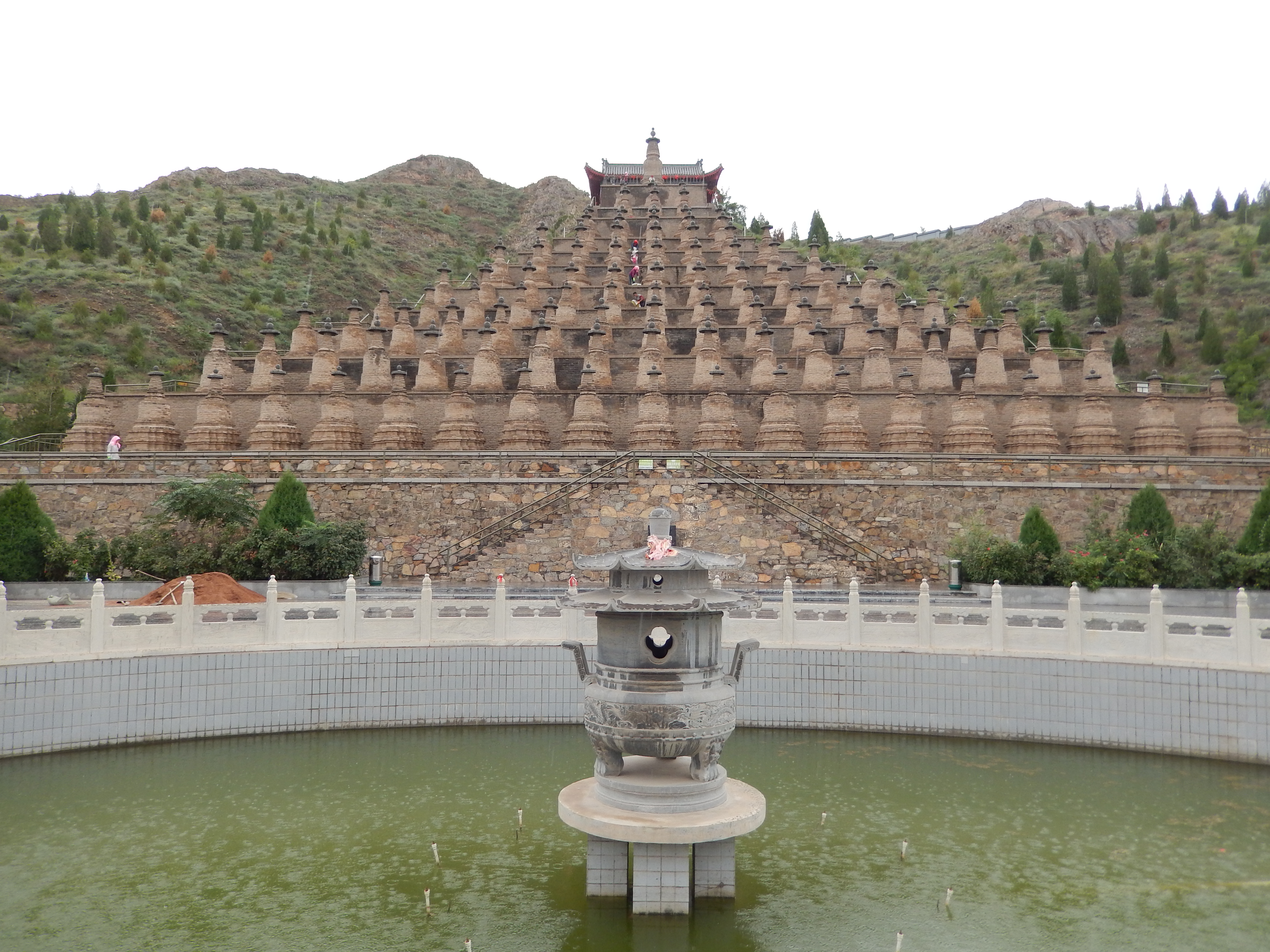
Qingtongxia 108 Stupas is a group of Buddhist structures, not a single pagoda. On the western side of the Yellow River at Qingtongxia in Ningxia, the towers spread across a hillside in a carefully ordered arrangement. The first impression comes from seeing them together: repeated forms, rising ground and the river landscape beyond. A closer visit adds architectural detail, but the setting is part of the subject, not just a background for photographs.
Start with the whole arrangement
The 108 stupas occupy twelve terraced rows in an overall triangular arrangement, widening toward the bottom. Before concentrating on individual towers, look at the outline of the group and the way each row follows the slope. Repetition makes the composition legible at a distance; the changes in level give it depth.
Begin wherever the permitted visitor area gives you a broad view. Look from the lower rows toward the uppermost tower, then trace the edges of the triangle. There is no need to count every structure to understand the design. Seeing the relationship between rows is more useful than collecting a photograph of each tower.
Then notice the differences between towers
The stupas are not all identical. Their bases, rounded bodies and upper elements vary in shape and proportion. Once you have taken in the group, compare a few structures that you can see from an accessible area. Notice where a base meets the body, how broad or narrow that body appears, and how the upper part finishes the silhouette.
The visible surfaces also reflect a history of repair. The complex has undergone restoration over time, including substantial work in the late twentieth century. Do not assume that every exposed brick or finish belongs to the original construction. Look at the forms without trying to date individual surfaces by appearance alone, and avoid touching or climbing the structures.
A Buddhist site with an uncertain beginning
Ningxia's official tourism information identifies the group with Tibetan Buddhist heritage and the Western Xia period. Its precise founding date is uncertain: heritage accounts discuss later historical references alongside Western Xia material found during restoration. That makes a single confident construction year less helpful than understanding the site's longer history of use and repair.
The group was listed for national cultural heritage protection in 1988. Its religious background gives the architecture context, but the number in its name is not enough to explain why this particular arrangement was built. You can appreciate the composition without assigning a specific symbolic meaning to all 108 towers.
Keep the Yellow River in the picture
The hillside and river give the towers a sense of scale that a close photograph cannot show. After looking at the masonry, step back within the permitted areas and take in the wider landform. The orderly rows sit against the slope, while the water opens up the view beyond them.
The stupas belong to the wider Qingtongxia Yellow River Grand Canyon scenic area, which also includes river and hydraulic-engineering sights. Those are separate features, not parts of the Buddhist structures. Decide which aspects interest you rather than assuming that seeing the towers means you have seen the entire scenic area.
Build a visit around looking, not rushing
A simple sequence works well: take in the group, look closer at a few forms, then leave time for the river setting. Follow the areas open to visitors rather than relying on a particular viewpoint or route being available. If your group has limited walking comfort, check access within the scenic area before committing to the day's plan.
Check current visitor information before you go, especially opening arrangements, admission and access between the scenic area's attractions. Do not build a tight onward connection around an assumed boat departure or transfer service. Confirm what is operating for your travel day, and leave room to adjust if the available route differs from what you expected.
Photograph the pattern as well as the details
Try a wider composition that keeps the rows and hillside together, then a closer view of contrasting stupa shapes. Where the permitted view allows, include the river to show why the location matters. Changing light alters shadows and the separation between towers, but there is no single guaranteed best hour. Work with the conditions and access you have, without crossing barriers for a cleaner frame.
Where it fits in a Ningxia journey
This stop suits a Ningxia trip that connects Buddhist architecture and regional history with the Yellow River landscape. It is particularly relevant when you are exploring the Qingtongxia and Wuzhong area rather than staying within one city. Travelers interested in archaeology or landscape photography may want more time to observe than a group looking for a quick landmark photograph.
For the wider landscape, explore the Yellow River Grand Canyon. If your journey also takes you into Wuzhong, Wuzhong morning tea brings a different, everyday dimension to the trip.
Historical references: Qingtongxia's official stupa profile and an archaeology report published by CNR. Check current visitor arrangements separately before traveling.