Place and experience details
Huangpu River Ferry
A public river crossing between Puxi and Pudong
The Huangpu River Ferry is part of Shanghai's everyday transport, carrying people between Puxi on the west bank and Pudong on the east. It is a short, low-cost crossing, not a sightseeing cruise or a private boat trip. Different ferry routes connect different parts of the river, so choose the crossing for where you want to walk next rather than treating every line as the same experience.
Why take the ferry rather than cross underground?
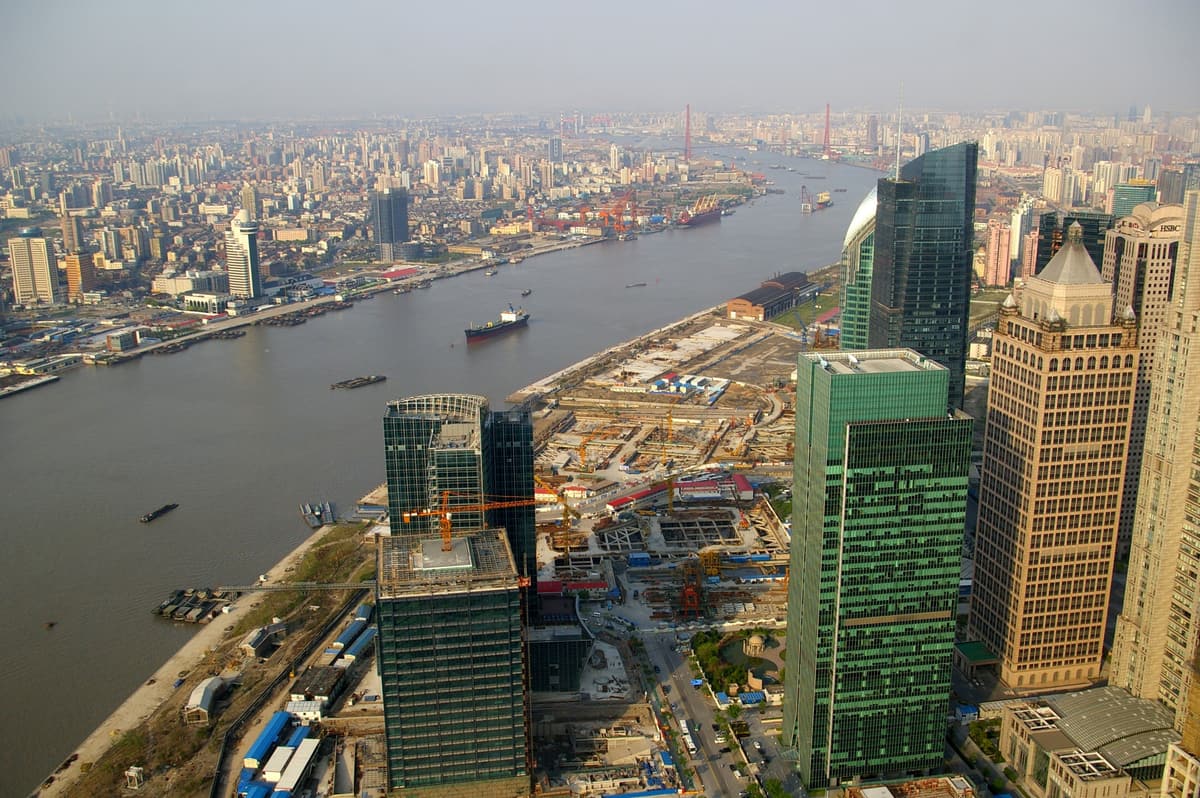
If the river is already part of your day, the ferry lets the journey become part of the view. You leave one waterfront behind, watch the distance between the banks open up, and arrive with a different angle on the city. Around the central riverfront, that can mean looking back toward the Bund or toward Pudong's towers rather than seeing them only from a promenade.
It is also ordinary public transport. Sharing a crossing with people getting on with their day gives a brief sense of Shanghai's commuter rhythm, without turning their routines into a performance. The appeal is the simple movement across the water, not a guided show or a long list of sights.
What happens on the crossing
Find the correct ferry entrance, check the direction and follow the boarding instructions. Once aboard, choose a safe place to sit or stand without blocking other passengers. Depending on the vessel and the areas open to passengers, you may look out from a cabin window or an accessible deck; do not assume every boat offers the same space.
The crossing is short, so put the camera down for a moment as well as taking photographs. Notice how the riverbank you left becomes a wider city view and how the opposite shore comes closer. Follow crew instructions when it is time to get off, then continue on foot from the arrival pier. The walk after the ferry matters as much as the ride itself.
Choose the piers before you set off
For a central river crossing, Shanghai's official transport information lists the Dongjin line between East Jinling Road Ferry Pier in Puxi and Dongchang Road Ferry Pier in Pudong. It also lists the Dongfu line between East Fuxing Road Ferry Pier and Dongchang Road. These are different departures, not interchangeable names for one pier.
Use those names as a starting point, not a promise that a particular sailing will be available. Routes and operating arrangements can change, including temporary holiday restrictions. Check current ferry information before you go, confirm which bank you are leaving from, and look at the walk from your arrival pier to your next stop. Shanghai Ferry's official WeChat account, 上海轮渡, provides current route information under 云上航线.
Route reference: Shanghai's official ferry information. Check the operator's latest notices for your travel day.
Public ferry or sightseeing cruise?
They serve different purposes. Choose the ferry when you want to get across the river and keep moving through the city. Choose a sightseeing cruise when time on the water is the main activity and you want a longer, visitor-oriented outing built around river views. Neither choice needs to replace the other; decide what you want that part of the day to do.
Public ferry
A practical, short cross-river journey. Simple local transport with views along the way; the arrival bank is part of your onward route.
Sightseeing cruise
A longer outing designed around views from the river. More visitor-oriented, with time on the boat as the activity rather than just a crossing.
A small part of a Shanghai walking day
The ferry works well as a link between a Puxi riverside walk and time on the Pudong waterfront. Plan the walking sections first, then see whether a crossing joins them sensibly. Reaching the pier and continuing from the other side still take time, so avoid adding a ferry simply to tick off another activity.
You do not need to give the crossing its own half-day slot. Leave room for boarding and any wait, and keep an alternative way across in mind if service changes or the weather makes the river less appealing. For a first visit, one useful crossing can be enough.
Start with the Bund if you want to build the day around the central riverfront. Our three-day Shanghai route offers a wider framework; a ferry crossing is an optional link within it, not a separate major attraction.
Who might enjoy it — and what to check
First-time visitors can use it to connect two sides of Shanghai rather than immediately returning to the same bank. Photographers may enjoy the changing angles, although the boat keeps moving and a clear view is not guaranteed. Families looking for a short transport experience can make it part of a walk, while travelers interested in everyday city life may prefer its straightforward purpose to an organized river outing.
If steps, crowds or standing are difficult for someone in your group, check boarding access and available seating before relying on the ferry. Keep children close during boarding and near the water, and follow the crew's guidance. It is public transport rather than a private service: any help we arrange is with planning and local coordination, not an exclusive boat or a guaranteed seat.