Place and experience details
Tashilhunpo Monastery
A living Tibetan Buddhist monastery in Shigatse
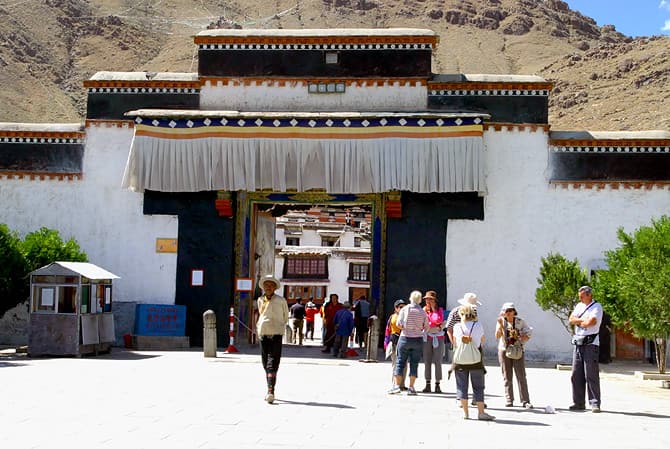
Tashilhunpo Monastery sits against the hillside in Shigatse, where its halls and golden roofs are part of the city's religious landscape. It belongs to the Gelug tradition of Tibetan Buddhism and remains a place of worship and monastic life, not simply a collection of historic buildings. A visit makes more sense when you leave time for the spaces between the halls as well as the interiors that are open that day.
Why it matters in Shigatse
Founded in 1447 by Gendun Drub, Tashilhunpo later developed a close association with the Panchen Lamas. Its assembly hall, Maitreya halls and memorial stupas help explain that history without requiring a long list of dates. The connection is still visible in the way religious buildings sit alongside spaces used for prayer and study.
For a first visit to Shigatse, the monastery gives the city more context than a brief stop for its skyline. People come here with different purposes: some to worship, others to learn or look at the architecture. As a visitor, recognizing those different uses is more helpful than trying to treat every space as a sightseeing stop.
Look beyond the golden roofs
The hillside setting brings the buildings into layers, with larger halls rising above smaller spaces and paths. From an open courtyard, look at how roofs, walls and entrances relate to one another before moving inside. The scale changes at a doorway: a broad exterior view becomes a closer encounter with painted decoration, pillars and religious images.
Where access permits, the assembly hall and the Maitreya and memorial halls offer different ways to understand the complex. You do not need to identify every figure to appreciate the care given to these rooms. Notice the relationship between an image and the space around it, rather than assuming the largest building is the only one that matters.
Follow the open spaces, not a fixed checklist
Begin with the visitor information at the entrance and follow the signed route and areas open to visitors. There is no useful promise that every hall will be accessible in a particular order. Religious activities, maintenance or local arrangements can affect access, so let the visit respond to what is actually available.
Pause in courtyards and near decorated doorways without blocking passage. If pilgrims are praying or moving through a hall, give them room rather than stepping across their activity for a closer view. A quiet stretch between buildings can be as useful as another interior: it lets you see how this is a working monastery rather than a sequence of exhibits.
Respect worship and the people around you
Dress respectfully, keep your voice low and follow signs and staff instructions. Do not touch statues, murals, offerings or other religious objects. An open door is not permission to enter a restricted room; ask if the boundary is unclear. Avoid interrupting prayer or asking people to repeat an action for your camera.
Check photography rules at each building
Photography rules can vary by building and may change. Follow the signs and staff instructions on the day, including any no-photo areas. Permission to photograph an exterior does not establish permission inside the next hall. Ask before photographing people and accept a refusal without pressing. If you are uncertain, put the camera away until you can check.
Give it room within a Shigatse day
Make Tashilhunpo an anchor for the day rather than a hurried stop between long transfers. Afterward, allow time for a meal and a walk along local streets if you feel like continuing. You can decide whether another stop adds something to the day once you know how much walking the monastery visit has involved.
Check current visitor information before you go, including admission arrangements, opening hours and temporary closures. Official notices have recorded closures for maintenance and changes around religious events; they are a reason to verify your travel day, not a recurring timetable. If you are leaving Shigatse afterward, keep a realistic margin for reaching your onward transport.
Allow for altitude and walking effort
Shigatse is a high-altitude city. Slopes, steps and a long walk through the complex may feel more demanding than a similar visit at lower altitude. Choose a slower pace, allow rest and avoid stacking the monastery visit with an ambitious hillside walk or a tightly packed afternoon. If walking is a concern for your group, confirm access arrangements before relying on a particular route through the buildings.
Who will get most from the visit?
Tashilhunpo suits travelers curious about Tibetan Buddhist culture, architecture and the history of Shigatse, including those encountering a working monastery for the first time. It rewards patient observation rather than a fast photo circuit. You do not need specialist religious knowledge, but a willingness to watch quietly and let worship take priority makes the visit more considerate and more meaningful.
Background reference: the Ministry of Culture and Tourism's monastery profile. For visitor notices, consult Tibet's culture and tourism department and confirm arrangements with the site before visiting.